Nissan Tekton is the cheapest SUV with luxury features, 670HP engine with full power
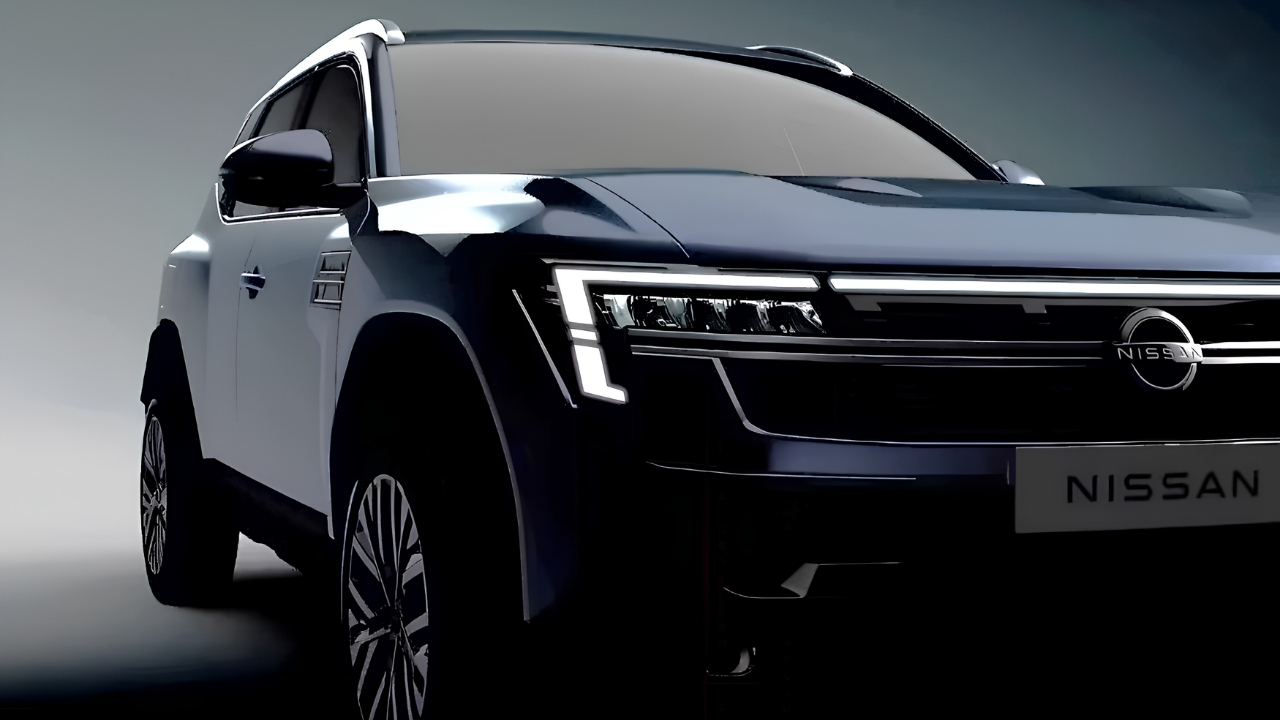
Nissan has officially pulled the curtain off its most important India launch in years—the all-new Tekton SUV.
Unveiled globally from Mumbai on July 9, 2026, the Tekton isn’t just another compact SUV; it’s Nissan’s strategic answer to the Creta, Seltos, and Kushaq segment, built to win back attention with Patrol-inspired design, turbo-petrol muscle, and a feature list that finally feels competitive.global.
A Design That Borrows From the Big Brother Patrol
From the first glance, the Tekton makes its intentions clear. Nissan’s design team has lifted heavy cues from the flagship Patrol, giving the Tekton a commanding road presence that’s rare in the sub-4.3-metre SUV space.
The front end is dominated by a bold, upright grille flanked by sharp LED headlamps, while a connected LED light bar stretches across the width, adding a modern, premium touch.global.
The profile is equally muscular, with pronounced wheel arches, a rising shoulder line, and 17- or 18-inch alloy wheels (depending on variant) that fill the arches nicely. At the rear, another connected LED strip ties the tail-lamps together, and the high-mounted stop lamp sits cleanly in the roof spoiler.
Overall dimensions—4,349 mm long, 1,815 mm wide, 1,674 mm tall, on a 2,657 mm wheelbase—put it right in the sweet spot for mid-size SUV buyers who want space without going full-size.
Ground clearance stands at a healthy 212 mm, making it genuinely capable on broken city roads and light off-road trails alike.
Approach and departure angles of 27° and 35° respectively suggest Nissan hasn’t just styled it for the showroom; this SUV can handle the occasional rough patch without scraping its belly.
Cabin That Feels a Segment Above
Step inside, and the Tekton continues to impress. The dashboard layout is clean and driver-focused, with a large 10.1-inch touchscreen infotainment system that supports wireless Apple CarPlay and Android Auto, plus built-in Google Assistant.
Ahead of the driver sits a crisp 10.25-inch fully digital instrument cluster that can be customized to show navigation, trip info, or ADAS status.
Nissan hasn’t skimped on comfort either. Ventilated front seats are available on higher trims, along with a 6-way electrically adjustable driver’s seat, dual-zone climate control, and a panoramic sunroof that floods the cabin with light.
Ambient lighting with 48 colour options, a wireless charger (MagSafe-compatible), and a premium sound system round out the lifestyle features. Rear passengers get dedicated AC vents, ample knee room thanks to the long wheelbase, and a flat-ish floor that makes the middle seat usable on longer trips.
Boot space is a standout figure: 518 litres with all seats up, expanding to well over 1,700 litres when the 60:40 split-folding rear bench is dropped. That’s Creta-beating practicality for weekend getaways or bulk shopping runs.
Turbo-Petrol Engines With Real-World Punch
Under the hood, Nissan is offering two turbo-petrol options, both E20 fuel-ready and tuned for Indian conditions. The entry-level unit is a 1.0-litre, three-cylinder turbo (internally codenamed T160) producing 100 PS and 166 Nm of torque, paired exclusively with a 6-speed manual gearbox.
It’s aimed at buyers who prioritize fuel efficiency and lower purchase price without giving up turbo responsiveness.
The star of the lineup, however, is the 1.3-litre, four-cylinder turbo (T280), co-developed with Renault. This engine puts out 163 PS and a robust 280 Nm of torque, available with either a 6-speed manual or a smooth 6-speed dual-clutch automatic (DCT) with fly-by-wire shifting.
In real-world driving, the 1.3T feels eager off the line, pulls strongly through the mid-range, and has enough top-end to make highway overtakes effortless.
ARAI-certified mileage figures are competitive: 19.4 kmpl for the 1.0 MT, 17.8 kmpl for the 1.3 MT, and 18.5 kmpl for the 1.3 DCT.
While real-world numbers will be slightly lower, especially in city traffic, they’re still respectable for a turbo-petrol SUV in this class.
Safety and Tech That Finally Matches the Rivals
Nissan has clearly listened to feedback from previous launches. The Tekton comes standard with six airbags (driver, front passenger, two curtain, and two side), ABS with EBD, ESP, traction control, hill-hold assist, and a rear parking camera with dynamic guidelines.
Higher trims add a comprehensive Level 2 ADAS suite, including adaptive cruise control, autonomous emergency braking, lane-keep assist, blind-spot warning, traffic sign recognition, and rear cross-traffic alert.
The SUV has already been tested under Bharat NCAP and carries a 5-star safety rating, a crucial selling point for family buyers.
Additional safety touches include tyre-pressure monitoring, speed alerts (single beep over 80 kmph, continuous over 120 kmph), ISOFIX child-seat mounts, and a reinforced body structure designed to absorb and dissipate impact energy efficiently.
Driving Impressions: Comfortable, Not Sporty
On the move, the Tekton prioritizes ride comfort over sharp handling. The MacPherson strut front and twist-beam rear suspension setup soaks up bumps and broken tarmac with ease, making it an excellent city commuter.
Steering is light and precise at low speeds, ideal for tight parking lots, though it does feel a bit numb when you push harder on winding roads.
The 1.3T DCT variant is the pick for those who do a lot of highway driving—the dual-clutch gearbox shifts quickly and keeps the engine in its powerband, while the turbo ensures there’s no lag when you need to overtake.
The 1.0T manual, meanwhile, is surprisingly peppy in urban conditions, though it does feel stretched on steep inclines when fully loaded.
Braking is confident, with disc brakes up front and drums at the rear (a common cost-saving measure in this segment).
NVH levels are well-controlled; engine noise is muted under normal acceleration, and wind/road noise only become noticeable at triple-digit speeds.
Variants, Colours, and Market Positioning
At launch, the Tekton was offered in six monotone colours: Indigo Blue, Moonbow Gray, Flare Garnet Red, Onyx Black, Blade Silver, and Pearl White.
Twelve variants span the two engines and three transmission options, with prices ranging from ₹10.49 lakh to ₹18.59 lakh (ex-showroom, India).
The top-spec Tekna variant bundles almost every feature—ADAS, ventilated seats, electric driver’s seat, panoramic sunroof, and the premium interior touches—making it a genuine value proposition against similarly equipped Creta and Seltos trims.
Nissan is clearly positioning the Tekton as a “Baby Patrol” in spirit, but with a price tag that undercuts many rivals while offering more standard safety and comfort features.
For buyers who’ve been waiting for Nissan to bring something truly competitive to the Indian SUV arena, the Tekton finally delivers on that promise.global.
Final Verdict: A Genuine Contender in the Mid-Size SUV Wars
The Nissan Tekton isn’t perfect—some may miss a diesel option or all-wheel drive, and the rear drum brakes are a minor compromise.
But as a package, it ticks almost every box: bold design, spacious and well-equipped cabin, punchy turbo-petrol engines, strong safety credentials, and aggressive pricing.
For anyone shopping in the ₹12–18 lakh SUV segment, the Tekton now demands a serious test drive before signing on the dotted line.