Tata Nano EV Toy Car : What We Know About the Possible Electric Comeback
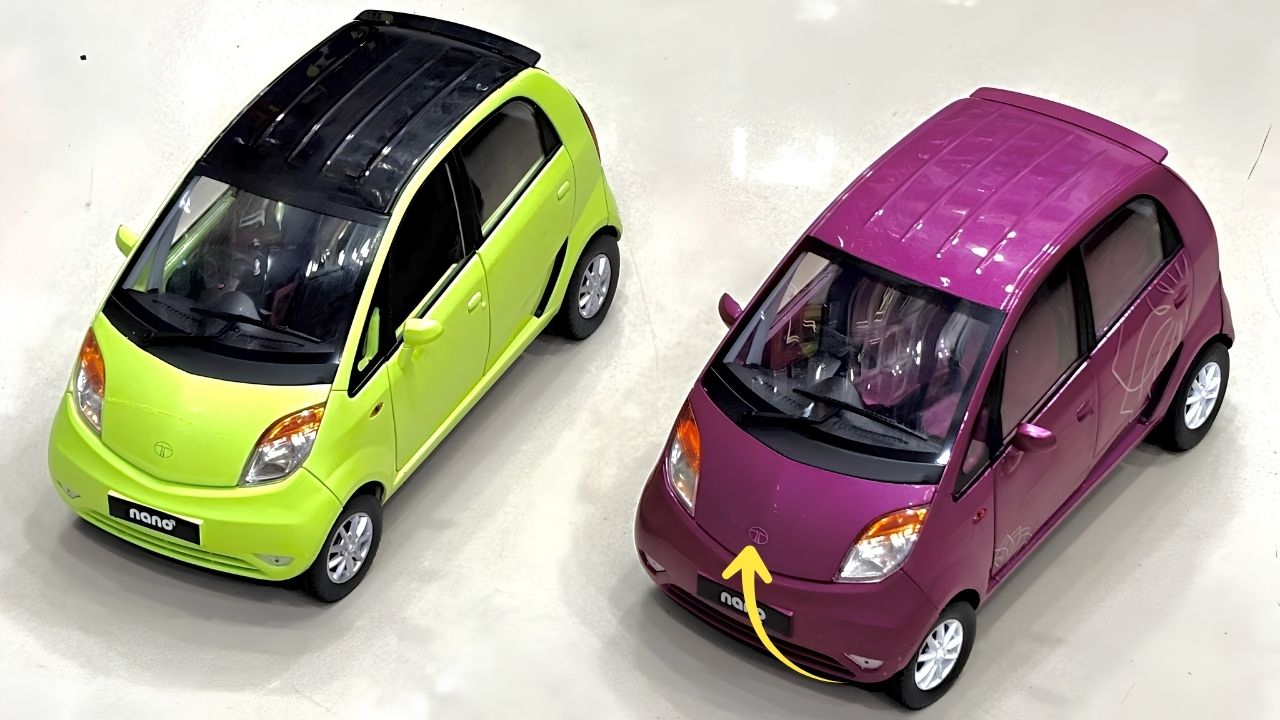
The Tata Nano remains one of India’s most memorable small cars. It was introduced as an affordable city vehicle for families and first-time car buyers, but its journey in the Indian market ended years ago.
Now, the name has once again started appearing in automotive discussions because of reports and online speculation about a possible electric version.
However, readers should separate confirmed information from social media claims. Tata Motors has not officially announced the launch of a production Tata Nano EV, and there is no confirmed launch date, battery specification, performance figure or showroom availability at present.
Recent reports suggest that a senior Tata design executive expressed interest in seeing the Nano return in an electric avatar, but that comment was not a formal product confirmation.
Why the Nano EV Is Trending Again
The idea of an electric Nano has attracted attention because the Indian automobile market has changed significantly.
Electric vehicles are becoming more familiar to urban buyers, charging infrastructure is expanding and many customers are looking for compact cars that are easy to drive and inexpensive to operate.
A small electric hatchback could make sense for daily city travel. It could be used for office commutes, school runs, shopping trips and short-distance family journeys.
The compact dimensions would also make it easier to park on crowded roads and move through narrow streets.
The Nano name already has strong public recognition. Although the original model did not achieve the sales success Tata Motors expected, it remains widely remembered.
An electric version with a modern design, improved safety and practical range could give the nameplate a completely different opportunity.
Possible Design and Cabin Changes
If Tata Motors ever develops a Nano EV, the design is unlikely to be a simple return of the old petrol model. The car would need a fresh appearance to meet current customer expectations and modern safety requirements.
The exterior could retain the original Nano’s tall and compact shape while receiving new styling elements. A closed front grille, redesigned headlamps, smoother body panels and aerodynamic wheels could help identify it as an electric vehicle.
LED lighting and a more substantial bumper design would also give the small hatchback a contemporary appearance.
Inside, the possible Nano EV could feature a cleaner dashboard, a digital instrument display and a compact infotainment screen.
Smartphone connectivity, steering-mounted controls, USB charging ports and rear parking sensors would be useful features for urban owners.
The cabin would probably continue to focus on space efficiency. A tall roof and upright seating position could provide reasonable headroom for four occupants despite the car’s small footprint. Tata could also use foldable rear seats to create additional luggage space when required.
Expected Battery and Range
There are several online claims about the possible Tata Nano EV’s battery capacity and driving range, but these figures have not been confirmed by Tata Motors.
Some reports speculate about a battery pack in the 15 kWh to 25 kWh range, while estimated driving ranges vary from approximately 150 km to more than 200 km on a single charge.auto.
For a small city-focused EV, a practical real-world range of around 150 km to 200 km could be sufficient for many users. Such a vehicle would not necessarily be designed for frequent long-distance highway travel. Instead, its priority would likely be low running costs, easy manoeuvrability and convenient home charging.
The final range would depend on battery size, vehicle weight, motor efficiency, tyre design, air-conditioning use and driving conditions.
Tata would also need to balance range with affordability because a larger battery would increase the vehicle’s weight and development cost.
Charging and Performance Expectations
A future Nano EV could be designed primarily for home charging. A standard AC charging system might allow owners to recharge the vehicle overnight using a domestic power connection.
A faster charging option could be offered in higher variants, although this remains speculative until official details are released.
Performance would probably be tuned for city driving rather than outright speed. Instant electric torque could make the car feel responsive in traffic, while a moderate top speed would help preserve battery energy and maintain the vehicle’s urban character.
Regenerative braking could also improve efficiency by recovering a small amount of energy whenever the car slows down.
Multiple driving modes, such as Eco and City, might allow drivers to select between maximum efficiency and quicker response.
Safety Would Be Important
Safety would be one of the most important areas for any Nano revival. Buyers today expect more than a low purchase cost, especially when choosing a family vehicle.
A modern electric Nano would need essential safety equipment such as airbags, ABS with electronic brake-force distribution, seat-belt reminders, electronic stability assistance where applicable and rear parking sensors. A stronger body structure and improved crash protection would also be necessary.
The battery pack would require proper protection from impact, water and excessive heat. Tata Motors would also need to follow applicable Indian regulations for electric vehicles, charging systems and high-voltage components.
The viral images circulating online should not be treated as official photographs. A fact-check report found that images showing a supposed Nano facelift EV, along with claims of a specific price and range, were AI-generated concept visuals rather than evidence of a Tata Motors launch.
The Reality Behind the Toy Car Claims
Some online videos and posts describe the Tata Nano EV as a “toy car” or claim that a new model has already arrived with an extremely low price. These claims can create confusion among readers and potential buyers.
In many cases, the vehicles shown may be scale models, concept illustrations, modified old Nanos or computer-generated designs.
A modified electric Nano is not the same as a factory-built Tata Nano EV. Converted vehicles may use different batteries, motors, controllers and safety systems, and they may not carry the same warranty or certification as a new production car.
At present, Tata Motors has not announced official bookings or deliveries for a Nano EV. There is also no verified production specification available from the company.
Customers should therefore avoid paying booking amounts to unofficial websites, social media pages or individuals claiming to represent the manufacturer.
What a Successful Nano EV Would Need
For the Nano name to succeed in the electric era, Tata Motors would need to position the vehicle carefully. It would have to offer a modern appearance, dependable after-sales support, acceptable safety and enough range for everyday use.
The car would also need a comfortable cabin and a clear ownership advantage over electric scooters and larger hatchbacks. A strong warranty for the battery and motor could help reduce concerns among first-time EV buyers.
Most importantly, the vehicle would need to be genuinely practical rather than merely inexpensive. Customers may accept a small cabin and modest performance, but they will still expect reliable air conditioning, useful storage, safe handling and predictable charging.
Final Word
The Tata Nano EV remains a possibility discussed in the automotive industry, but it is not an officially launched Tata Motors product at this stage.
A design executive’s positive remark has renewed interest in the idea, while viral images and toy-car-style videos have added to the excitement.
Until Tata Motors releases an official announcement, all battery, range, feature and launch claims should be treated as estimates or speculation.
The concept is appealing because a small electric city car could suit India’s crowded urban roads, but the real test would be whether Tata can combine affordability, safety and dependable everyday usability in one modern package.